Ocean Power Archives

Main


January 01, 2008

Ten Alternative Energy Speculations for 2008: Geothermal, Wind and Wave, and Thin Film Hype

This article is a continuation of my Ten Alternative Energy Speculations for 2008, with picks #8, 9, and10 published last Thursday.  If you haven't already, please read the introduction to that article before buying any of the stock picks that follow.  These companies are likely to be highly volatile, and large positions are not appropriate for many investors.   My least risky picks are part of that same article linked to above; the moderately risky picks are here.  This article contains the most speculative three picks.

#3 Nevada Geothermal Power (OTCBB:NGLPF or Toronto:NGP.V) US$1.29 or CAD$1.26

Geothermal first started catching investors' attention about six months ago.  I went into detail as to the reasons for its appeal, and the factors bringing it to investors' attention in this profile of Geothermal power in October.  

Since then, we have been given an added reason to appreciate Geothermal in the United States.  While the recent energy bill did not contain a national RPS, nor tax credits for renewables, it did give the geothermal community much of what they were asking for since it contained the "Advanced Geothermal Energy Research and Development Act of 2007." 

There are three ways to invest in geothermal power: through the technology, through existing plant operators, and through resource explorers and developers.  The provisions relating to Enhanced Geothermal Power and Co-production in oil fields should help technology and service providers such as Ormat (NYSE:ORA) and United Technologies (NYSE: UTX) over the long term, since they will help open up new opportunities for Geothermal.  Over the short term, which is what this article is about, I expect the "Industry-coupled drilling" provision will be most important, and help explorers and developers of conventional geothermal resources.

According to the Geothermal Energy Association, the Industry-coupled drilling provision "pairs the federal government with geothermal developers to reduce drilling risks and improve drilling precision."  Geothermal exploration and development is a very risky process, so government risk-sharing should greatly increase the value of Geothermal prospects by lowering the effective discount rate at which they are valued.  Coming as it does early in the development process, a reduction in risk could easily be worth more to a company which owns the rights to develop an undeveloped geothermal resource than the later boost to income that would come from a Production Tax Credit, even though the industry-coupled drilling provision is likely to cost the government far less than a Geothermal Production Tax Credit.

US-based geothermal developers are most likely to benefit from this provision.  These include US Geothermal (OTCBB: UGTH, GTH.TO), Sierra Geothermal (OTC: SRAGF, SRA.V),  Raser Technologies, (NYSEArca:RZ), and Nevada Geothermal (OTC BB: NGLPF.OB, NGP.V)).  US Geothermal and Raser Tech are up over 3x from their 52 week lows, while Sierra and Nevada Geothermal are each up about 2x, although the Nevada Geothermal share price was stagnant for the previous two years, while Sierra Geothermal has been following a steady uptrend.

Comparing these last two with the least recent appreciation, Sierra Geothermal has many more early stage projects, while Nevada Geothermal has just four high quality projects nearer to production.  In fact, Nevada Geothermal owns Sierra Geothermal's most advanced project (Pumpernickel), and Sierra's exploration and development efforts will earn them at most a 50% share of the project.   This is only Nevada Geothermal's second most advanced project, after their wholly owned Blue Mountain project which is on track to begin producing electricity in 2009, and for which they have already completed a Power Purchase Agreement and an interconnection agreement with local utilities. Nevada Geothermal is currently funding development of its projects with loans from the likes of Geothermal specialist Glitner Bank and Morgan Stanley, while Sierra Geothermal is financing its exploration needs with dilutive private placements.

Because of the relatively small recent run-up for Nevada Geothermal, its strong financial position, and ownership of a late-stage project (as well as sufficient promising projects to keep them busy with development for many years to come), I see the most potential for robust returns in Nevada Geothermal among geothermal developers.   

#2 Finavera Renewables (TSX:FVR or FNVRF.PK) CAD$0.335 or US$0.3371

I chose to include Finavera in my Top Ten Speculations for 2008 for my own reasons, but AltEnergyStocks.com Editor Charles Morand has been following the company longer and more closely than I have myself, so I asked him to profile it.  You can read what he has to say about Finavera Renewables here or simply scroll down to the next post.

#1 First Solar (Nasdaq:FSLR) $267

When I disclosed that I was short First Solar in the first installment of this series, I received an incredulous comment soon after the article was syndicated on Seeking Alpha: "OUCH!! You have a short position in FSLR? I hope it doesn't come back and bite you!"  I'm sure the commenter is not alone in his conviction that First Solar's rise will continue.  The fact that First Solar has risen so far so fast only because people like the commenter have been purchasing the shares like hotcakes all year.

Shorting is inherently more dangerous than being long, because in a long position you can not lose more than you initial investment.  Shorting a momentum stock, even when it is overvalued, can be especially risky, because momentum tends to be a self-fulfilling prophecy, with more investors becoming interested and driving the price up as they try to buy the stock.  For all those reasons, shorting First Solar deserves to be the #1 riskiest of my 10 speculations for 2008. 

Why did I decide to short at all?  What makes me think that 2008 will be the year that First Solar's bubble pops?

First Solar's valuation seems out of line because of an inherent limitation on their profitability.  Their solar panels are based on Cadmium-Telluride (CdTe) thin film technology, and Tellurium (Te) is one of the scarcest elements in the Earth's crust.  In 2006, First Solar's 60MW of production consumed 4% of the world's annual supply of the metal.  In 2008, analysts expect revenues of approximately 4x the 2006 number, meaning they will need approximately 16% of new annual Tellurium supplies.  PrimeStar Solar, a private company is using a recent infusion of capital from General Electric (NYSE:GE) to quickly begin production of their own CdTe modules.  They do not disclose the timing of production "for competitive reasons," but their hiring and equipment orders speak of an aggressive schedule; I expect they will begin production in 2008.  

With this much demand on short-term Tellurium supplies, we can expect continued price increases.  First Solar cannot set the price of their product in the market, because they will be in direct competition with conventional solar modules as will as thin film modules based on CIGS and amorphous silicon technologies.  With the failure of the US Congress to extend tax incentives for solar or to pass a renewable electricity standard, demand for solar panels may not continue to grow as robustly as it it has in recent years.  If anything, this should cause prices per watt to fall somewhat in 2008.

Ethanol producers were caught in a commodity squeeze this year by using 25% of the United States corn supply.  In contrast to First Solar, ethanol production has only been growing 20-25% a year, much slower than the demand for Tellurium from CdTe cells, and corn production was artificially sustained at an uneconomically high level before the advent of corn ethanol by farm subsidies.  Hence, I would expect a commodity squeeze for CdTe producers at a lower percentage of supply.  My 16% projection for 2008 does not seem out of line to trigger a commodity squeeze, which could cause First Solar to miss (or at least cease to beat) earnings estimates in the coming year.  Missing or just failing to exceed earnings estimates almost always leads to quick price drops for high multiple companies.  According to Yahoo!, First Solar's trailing P/E is about 195.

If First Solar produces 240MW of panels in 2008, and Te prices remain at $100/lb, as they were in 2006, Tellurium cost alone would be $87 million [NOTE 3/8/08: I received a comment that I had lost a decimal in this calculation, with actual Te cost being only $8.7 million... don't take this as gospel, make sure to double-check if this makes a difference in your investment decision.], compared to First Call average estimated Revenues of $800M, and $146M estimated earnings.  I don't know what Tellurium prices were used in those estimated earnings, although I expect it was over $100/lb.  Whatever those estimates were, a $200/lb underestimate would completely wipe out earnings for 2008, and, as the oil price has shown us, even moderate increases in demand for a commodity with inelastic supply can create massive price rises.  What will new demand for Te rising from 4% of supply to 16% of supply in two years do to the price?

UPDATE 1/2/08: Ken Zweibel, President of PrimeStar Solar and former head of NREL's thin film partnership program, got back to me today on a research question for this article, now that the holidays are over.   He couldn't tell me much for strategic reasons, but did say that he isn't skeptical of First Solar's valuation, and "There is more Te from nontraditional sources than people are aware of."  I believe he is referring to Te from oceanic ridges, which I don't believe can be extracted in significant quantity within the next couple years, although a Tellurium price rise like the one I anticipate would lead to mining of oceanic ridges in the medium to long term.  Nevertheless, Ken is responsible for much of what we know about CdTe technology, so his comments should not be taken lightly, and there may be other nontraditional sources which can ramp up production more quickly. 

The other reason to believe that First Solar's meteoric rise might halt in 2008 has to do with investor sentiment.  An unscientific survey of sentiment among Seeking Alpha bloggers (myself excluded) has turned negative (as far as I can tell, only Andrew Ling is still writing positively about the stock), and the Tellurium problem is getting wide attention.  How long will it take the mainstream press to latch on to the Tellurium story?  It's impossible to say, and another run like last quarter could easily squeeze out the shorts.  

Taking this all into account, my short position is only about 0.1% of my portfolio, more of an intellectual experiment than a real bet.  As Keynes said, "The market can remain irrational longer than you can remain solvent."   I wouldn't advise anyone to take a short position in FSLR so large that they could not sleep through another doubling of the stock price. 

If any play is for gamblers, this is it.  But cards are stacking up against First Solar.

Links: Picks #10,9,8; Picks #7,6,5,4. Pick #2 Finavera Renewables

DISCLOSURE: Tom Konrad and/or his clients have long positions in UGTH, SRA, RZ,  NGP,  ORA, UTX, FNV, GE, and a short position in FSLR.

DISCLAIMER: The information and trades provided here are for informational purposes only and are not a solicitation to buy or sell any of these securities. Investing involves substantial risk and you should evaluate your own risk levels before you make any investment. Past results are not an indication of future performance. Please take the time to read the full disclaimer here.

#2 Finavera Renewables (TSX:FVR or FNVRF.PK)

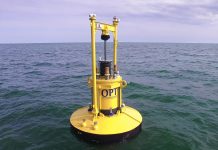
When I first got wind (no pun intended) of Finavera Renewables (TSX:FVR or FNVRF.PK), I did not make too much of it because my view was that commercial exploitation of wave power - which is the banner under which Finavera has decided to promote itself to the investor community - was a few years away at best. Then, upon hearing that the company had managed to get a prototype in the water (PDF document), I decided to do a bit more digging.

After all, if the technology worked, the economics of the business model would closely resemble those of my uncontested favorite at the moment: wind power. Wave power also had the advantage of being more predictable than wind. With a proven technology, the firm could get itself into power purchase agreements, lever up to take advantage of the relatively lower cost of debt, and go on finding new sites to exploit while its existing operations generated steady cash flows. At some point in the perhaps not-so-distant future, the company could become an acquisition target, and yet more upside could accrue to equity holders. What's not to like for an investor who is in early?

Almost immediately I came across something that truly poked my interest: rights to develop wind assets in Germany, Ireland and the Canadian provinces of Alberta and British Columbia. Granted, there was no big secret here. This information was there all along for anyone who bothered to look. Finavera posted on its website research notes by two Canadian boutique brokerages that cover the stock: Haywood Securities and Dundee Securities (both PDF documents). Both notes confirmed my intuition at the time (this was in late October '07), namely that the bulk of near-term value rested with the wind projects, not wave energy. Although valuations differed, both reports had a much higher target than the C$0.40 the stock was trading at, and my own experience with renewables-focused Canadian independent power producers (IPPs) told me that they were likely right. I pulled the trigger and went long at C$0.40.

Shortly after, things turned ugly. First, Finavera's device sunk to the bottom of the ocean before tests were completed, compounding fears by environmentalists and fishermen that this idea may spell nothing but disaster for marine life. Second, when Q3 results (PDF document) came out, it became clear that things were a lot worse (PDF document) than just a sunken piece of steel and a few worried anglers: the company had a working capital deficit of C$4.1 million, it had to write down C$6 million in goodwill related to the very technology that had just sunk and on which it was banking its future, and it was abandoning its German wind farm plans, which would have generated much-needed cash in the near term. What's more, rough conditions in capital markets caused by the credit crunch prevented Finavera from moving forward with a critical round of financing.

The stock got killed, flirting with the C$0.10 mark. Ouch...but I hung on. Within a week, Finavera announced that it had secured about C$2 million in financing (down from C$23 million it was initially hoping to raise) and had restructured its board. New board members had weaker cleantech credentials but stronger acumen in financial and business matters. Not exactly great news but I decided to hang on until late December, when I was scheduled to get back from a trip to India - this would give me time to think things through, and it's not like I'd bet the house on this one anyways.

It was while sitting at a small internet cafe after visiting a tea plantation in Kerala that I got the good news: Finavera was at the center of the biggest ocean power news story I could recall. Shortly after, more good news came out related to the firm's wave power activities. Maybe there was value in wave after all. And this brings us to...

The reason why we selected Finavera as our #2 speculative pick for 2008. I still feel that viewed through the lens of a conventional valuation approach, wind is where most of the value lays. There is no doubt, however, that the succession of positive wave-related news has created something of a buzz, as evidenced by the stock rebounding to close at C$0.335 ($0.3371 in the US) on Monday on heavy volumes. Tom and I both agree that the PG&E deal could continue to generate significant investor interest in both wave energy and in Finavera in particular, and that the stock could see some strong upside as a result. I increased my position on Monday and my adjusted cost base now stands at $0.37. More good news on the wave front could spell good things for this stock in 2008.

There are, of course, a number of important caveats:

(A) Unless anything has changed, the company must still fill a working capital gap of around $C2 million. With 174 million shares outstanding, which is very large relative to sector comps (i.e. small earning-less IPPs), the risk of dilution looms large. On the positive side, the recent recovery in share price is good news from the point of view of seeking financing.

(B) Without the German wind farms, no company operation will generate revenue or earnings until 2009 at the earliest, which is assuming that Finavera can secure all the funding it needs to set up its Alberta wind farms. But liquidity is not the only thing in short supply at the moment; the market for wind turbines is currently incredibly tight and small wind farm operators are reportedly having a heck of a time getting their hands on turbines and turbine parts. Personally, I would feel reassured if I saw company management focus on executing on wind first, and worrying about wave once cash is coming through.

(C) Finavera wrote down all of the goodwill associated with its 2006 purchase of AquaEnergy (PDF document), which is how it initially got its wave technology. In fact, according to the company's Q3 2007 filings (PDF document), goodwill associated with the IP for the wave technology (called AquaBuOY) accounted for 97% of the value of all assets acquired in that transaction. While this write-down is more of an accounting formality than an indication that the technology is completely useless, as some may have thought, this still means that there were serious flaws and that Finavera's engineers must go back to the drawing board. In other words, this is not wind and the technology is far from ready for commercialization. Power purchase agreement or not, if Finavera wants to be a force to be reckoned with in ocean power it will have to have something to show for on the technology side before too long. Not to mention that if it doesn't soon the market will probably forget all about what just happened with PG&E and move on.

DISCLOSURE: Charles Morand has a long position in TSX:FVR.

DISCLAIMER: The information and trades provided here are for informational purposes only and are not a solicitation to buy or sell any of these securities. Investing involves substantial risk and you should evaluate your own risk levels before you make any investment. Past results are not an indication of future performance. Please take the time to read the full disclaimer here.


Featured Companies


Subscribe to this Blog

Enter your email address:

Delivered by FeedBurner


Subscribe by RSS Feed

Search This Site


Certifications and Site Mentions

Wealthtrack

Wall Street Journal


Seeking Alpha Certified

Best Way To Invest