Carbon Negative Impacts from Biomass Conversion
By Andrew Grant, Biomass Power Projects, LLC, Lee Enterprises Consulting Canada, New England, and California all have Carbon Credit programs to achieve GHG reduction goals. Several forms of biomass diversion from landfills, farms, and other biomass – dependent GHG sources are already in operation to support significant GHG reductions. Examples of GHG reductions are given, and the carbon impact of the different commercially available biomass to GHG reduction processes are described. The three groups of commercially guaranteed biomass conversion processes are: 1. Power Generation, Steam Generation, and CHP: from the combustion of biomass wastes. This industry, with about 100...
Covanta and Green Plains Partners Don’t Let A Crisis Go To Waste
by Tom Konrad, Ph.D., CFA
Last week, two of the stocks in my Ten Clean Energy Stocks model portfolio cut their dividends. Covanta Holding Corp (CVA) dropped its quarterly payout from $0.25 to $0.08 (a 68% cut) while Green Plains Partners (GPP) slashed its quarterly distribution from $0.475 to $0.12, a drop of 74.75%.
Before reducing their dividends, both companies had payout ratios near 100%, meaning that substantially all of their free cash flow was going to pay dividends. In general, companies are very reluctant to cut their dividends because it is a signal that their management thinks they cannot grow...
Blue Sphere’s Eyes On The Horizon
by Debra Fiakas CFA Renewable energy companies have to worry about flagging commodity prices that make it even more difficult to prove the competitive potential of alternative fuels, as well as possible disruption in the capital markets and valuation multiples which are concerns of all public companies. Shlomi Palas, the CEO of Blue Sphere, Inc. (BLSP: OTC/QB), a microcap in the Crystal Equity Research coverage group, is not dissuaded. He continues to push forward with the company’s strategy to own and operate biofuel-powered, grid-connected generation facilities. Blue Sphere has two food-waste-to-energy plants under construction...
Covanta’s Q1: Ten Clean Energy Stocks For 2019
by Tom Konrad Ph.D., CFA
Covanta Holding Corp. (NYSE:CVA)
12/31/18 Price: $13.42. Annual Dividend: $1.00. Expected 2019 dividend: $1.00. Low Target: $13. High Target: $25.
3/26/19 Price: $17.86. YTD Dividend: $0.25. YTD Yield: 1.9% YTD Appreciation: 33.1% YTD Total Return: 34.9%
Leading waste-to-energy operator Covanta's stock has been the second best performing holding in my 10 Clean Energy Stocks for 2019 model portfolio. While in many ways the company is similar to the clean energy Yieldcos that dominate the model portfolio, it is different in that it develops its own projects, while most Yieldcos depend on a sponsor to develop projects which...
Another Look at the Algonquin Power Income Fund
Tom Konrad, Ph.D., CFA The Algonquin Power Income Fund (AGQNF.PK) has been one of my star performers in an excellent year. Is it still a good investment at these prices? Since I recommended the Algonquin Power Income Fund (AGQNF.PK/APF-UN.TO) in January as a renewable energy income stock for 2009, the company is up 69%, in addition to the C$0.02 monthly dividend, worth approximately another 8% through August on the US$1.82 purchase price, making it the second-best performing of my ten picks (after Cree, Inc (CREE).) However, since the major basis for my recommendation at the time was the...
Covanta: Comfort In An Ample Dividend
by Debra Fiakas CFA In late August 2015, volatility turned its frightening countenance on the U.S. equity market. The volatility measure for the S&P 500 Index (VIX) spiked to a peak of 53.29 during trading on August 24th. While things have calmed down since, volatility remains well above the 20.00 level where many investors consider it too precarious to take new equity positions. At time like these it makes sense to seek the warm comfort of an ample dividend. Those regular cash rewards can make it worthwhile waiting for stock prices to calm down. Within...
China Recycling Energy: Profiting From Murky Air, But How Much?
by Debra Fiakas CFA Shanghai at sunset as the sun fades into the smog. Photo source: Suicup China’s industrial pollution problems are mounting. Global emissions of carbon dioxide (CO2) increased by 3% in 2011, reaching an all-time high of 34 billion tons. China contributed a whopping 29% of that carbon dioxide - nearly twice that of the second worst polluter, the U.S., which spit out 5.4 million tons or 16% of the total CO2 emissions. Policy makers in China have been slow to move against industrial polluters...
Covanta: The Big Player In Waste-to-Energy
by Debra Fiakas CFA Covanta Holding Corp. (CVA: NYSE) is among the largest waste-to-energy developers and producers in the U.S. The company couples waste collection services for local government and industry with power generation for local municipal or commercial customers. Covanta’s waste handling and ‘mass-burn’ process also allows for metal recovery and sales. The company operates forty-six waste-to-energy facilities mostly in North America supported by eighteen waste transfer stations and four ash landfills. Covanta is a big player in the waste-to-energy industry, but what kind of yield does it's stock offer investors? Covanta’s management team...
The Light On Blue Sphere’s Horizon
by Debra Fiakas CFA The stakes were high at the beginning of its fiscal year 2015, as Blue Sphere, Inc. (BLSP: OTC/QB), a developer of waste-to-energy projects, was facing deadlines to fulfill its contractual commitments to the sellers of its two ‘front burner’ waste-to-energy projects in North Carolina and Rhode Island. In the four intervening months it appears Blue Sphere has won all bets. Blue Sphere had purchased a biogas project from original owner Orbit Energy and had received an equipment financing commitment from Caterpillar. Unfortunately, an equity financing source withdrew its interest as...
In the Middle(sex) of the Organics-to-Power Sector
by Debra Fiakas CFA A post in June featured Middlesex Water Company (MSEX: Nasdaq) as an unlikely player in the waste-to-energy game. However, Middlesex has proven a capable project integrator, capitalizing on its collective knowledge of process engineering to launch a turnkey alternative energy service. A successful waste-to-energy project in the Village of Ridgewood, New Jersey has placed Middlesex squarely in the middle of the organics-to-power sector. Ridgewood taps its waste water for methane to power an electric generator. The power is used at the Ridgewood Water Pollution Control Plant, making the plant self-sufficient for electricity. The...
Darling’s Renewable Diesel Diamond
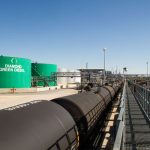
In July 2013, Darling Ingredients (DAR: NYSE) and its joint venture partner Valero Energy (VLO: NYSE) commissioned the largest facility in North America to convert waste animal fats into renewable diesel. The facility was strategic located adjacent to Valero’s petroleum refining installation in Norco, Louisiana.
At the time the facility was capable of pumping out 12,000 barrels of renewable diesel per day that could be dropped directly into Valero’s distribution network and blended with fossil fuel. Even at that production level the facility showed promise to deliver strong dividends back to its owners. The partners named their venture Diamond Green Diesel and celebrated the unparalleled achievement.
The two partners in Diamond Green...
Plasma Arcs For Pig Waste
This week MagneGas (MNGA: NASDAQ) announced new work completed toward plans to enter the commercial pork sector with a proprietary manure processing and disposal solution. Management held a meeting with the North Carolina Department of Environmental Quality and the U.S. Army Corps of Engineers to discuss MagneGas technology to treat agriculture waste and the state’s required environmental permit protocols. MagneGas aims to sell to pig farmers equipment based on its innovations.
The company wants to help pig farmers address environmental problems cause by manure accumulation with its proprietary waste sterilization process. Handling pig waste using conventional methods can be costly, but failure to...
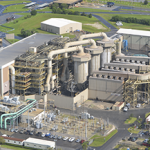
Earnings Roundup: Metals Prices Boost Covanta and Umicore
By Tom Konrad, Ph.D., CFA
You don’t have to own mining companies to benefit from rising metals prices.
This is a roundup of first quarter earnings notes shared with my Patreon supporters over the last week. Waste to energy operator Covanta and specialty metals recycler Umicore are both benefiting from skyrocketing metals prices.
Just as renewable energy and energy efficiency stocks have long shown that investors don’t have to own fossil fuel companies to benefit from rising prices of fossil fuels, recyclers like Covanta and Umicore are showing that you don’t have to own environmentally damaging mining companies to benefit from rising...
Advanced biofuels pioneer Terrabon files for chapter 7 bankruptcy: One-off or trend?
Jim Lane Closely-watched green gasoline producer collapses as Waste Management (WM) declines next financing round. What does it mean for companies like Fulcrum Bioenergy, Enerkem, Agilyx, Agnion, Renmatix, Genomatica, and InEnTec? The Digest looks at the inside story. In Texas, Terrabon filed for Chapter 7 bankruptcy protection; the company’s operations will cease and a trustee will be tasked with liquidating the company’s assets for the benefit of creditors. The complete Chapter 7 announcement is here. In a statement, Terrabon’s leadership said that company could not obtain additional corporate funding to finish developing and engineering its...
Utility Expects Growth From Green Consulting
by Debra Fiakas CFA Middlesex Water Company (MSEX: Nasdaq) has been providing the good people of New Jersey and Delaware with water services for a long time. Its longevity in the marketplace is probably one of the reasons, Middlesex can claim a string of successive revenue and earnings increases. The company achieved a net profit of $16.4 million on $115 million in total sales in the most recently reported twelve months. More importantly, Middlesex turned 27.7% of those sales into operating cash flow, an achievement that helps support the company’s investment plans and dividend. Like any other water...
Ten Solid Clean Energy Companies to Buy on the Cheap: #3 Waste Management, Inc....
In large part, the transition to clean energy will involve using our resources much more efficiently than we do now. One large potential feedstock for biofuels (and arguably the only one which is truly sustainable) is our trash. As the world economy grows, and the available stock of natural resources diminishes, society will have no choice but to use what we have more efficiently and throw less of it away. In addition to the now familiar recycling of Aluminum, glass, cardboard, paper, and plastic, yard and construction waste will find its way to cellulosic ethanol plants, and used cooking...