Fulcrum Bioenergy’s $115M IPO: The 10-Minute Version
Jim Lane The first zero-cost feedstock biofuels company comes to the public markets with its IPO. Like to see how this “Back the the Futuresque” technology unlocks value by converting household garbage into transportation fuel? Here’s our 10-minute version of the IPO from Fulcrum Bioenergy. In California, Fulcrum Bioenergy has filed an S-1 registration statement for a proposed $115 million initial public offering. The number of shares to be offered and the price range for the offering have not yet been determined. The company proposes to list under the symbol FLCM. UBS Investment Bank...
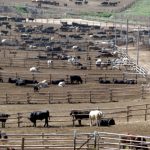
Green Plains’ Cattle Drive
As quickly as the ethanol producer jumped into the cattle business, Green Plains (GPRE: Nasdaq) has sold off half of its Green Plains Cattle Company to a group of investment funds for $77 million. Operating at six locations in Colorado, Kansas, Texas and Missouri, the company has the capacity to feed 355,000 head of cattle each year. The cattle business contributed $271 million to total revenue in the most recently reported quarter ending June 2019, delivering a modest operating profit near $7.3 million.
There has been considerable stress in the feed cattle industry. The number of cattle in feedlots is down compared to last year, an unusual development...
Green Plains Nabs 3 Ethanol Plants On The Cheap
Jim Lane In Nebraska, word has arrived from Green Plains (GPRE) that it will purchase the Madison, Ill., Mount Vernon, Ind. and York, Neb. ethanol facilities from Abengoa (ABGOY) Bioenergy with combined annual production capacity of 236 million gallons per year, for approximately $237 million in cash, plus certain working capital adjustments. The company said it was the successful bidder on three ethanol plants for sale conducted under the provisions of the U.S. Bankruptcy Code. Upon completion of the acquisitions, Green Plains will own and operate 17 dry mill ethanol facilities with combined production capacity of nearly 1.5...
Earnings Round-Up: ADM, Green Plains, Syngenta
Jim Lane Green Plains In Nebraska, Green Plains (GPRE) announced net income for the quarter was $42.2 million compared to net income of $25.5 million for the same period in 2013. Revenues were $829.9 million for the fourth quarter of 2014 compared to $712.9 million for the same period in 2013. Net income for the full year was $159.5 million compared to $43.4 million for the same period in 2013. Revenues were $3.2 billion for the full year of 2014 compared to $3.0 billion for the same period in 2013. Fourth quarter 2014 EBITDA was $90.7 million compared to...

Report Alleges EPA Tests Skewed Against Ethanol By Oil Industry Influence
by Jim Lane
In Washington, researchers for a report published by the Urban Air Initiative contend that “technical data that shows the nation has been exposed to decades of flawed test fuels and flawed driving tests, which in turn means flawed emissions results and mileage claims”. The complete Beyond a Reasonable Doubt series from UAI is available here.
Further, EPA emails obtained under the Freedom of Information Act reveal that, according to a report from Boyden Grey & Associates, the Agency appears to have directly solicited financial contributions and technical input, “especially on the fuel matrix,” from an oil industry controlled research organization.
Of the...

Beyond ZEVs: The Negative Emission Vehicle
by Jim Lane
Wandering the halls at the BIO World Congress and later to be seen again at ABLC NEXT this November, we ran across one of the most interesting technologies relating to ethanol production and markets we have seen in a month of Sundays, perhaps two months’ worth.
The problem
First, let’s revisit the problem. There’s simply too much ethanol being produced for the markets to absorb, given the Trump Administration’s massive cutbacks in US ethanol targets —In the resulting massively oversupplied market, the inevitable has happened, ethanol producers, growers and the Midwestern economies are being crushed. And they thought they...
ADM Separates Ethanol Business
Prelude to a spin-off?
by Jim Lane
The Archer Daniels Midland Company (ADM) is breaking news of breaking off their ethanol unit…and a tumbling 40% decline in profit.
In Chicago, Archer Daniels Midland Company reported their financial results for the quarter ended March 31, 2019, but most interesting to us, they are looking at separating their ethanol business with the option of spinning it off completely. They are also taking other actions to restructure and deal with challenges they say include weather issues and trade pressures.
ADM announced a “series of measures to continue to underpin long-term-value creation” which included:
“First, to meet growing customer...
Cellulosic Electricity: Stock Analysts v. Venture Capitalists
Romm v. Kholsa In a persuasive series of articles, entitled "Pragmatists vs. Environmentalists" (Parts I, II, and III) on Gristmill, Vinod Khosla provides the reasoning behind his "dissing" of plug-in hybrids, which drew the ire of Joeseph Romm. Neither seems to think the argument is settled, and Joeseph Romm returns fire here. As someone who knows as much about investing as Joe Romm and has written as much about Climate Change and Energy Policy as Vinod Khosla, I feel the need to jump into the debate and settle the matter. (Will either of them will notice?)...
Ethanol Producers Vs. California Air Resources Board
by Debra Fiakas CFA Sometime back Poet, LLC, the private producer of ethanol based in Sioux Falls, SD (my home state), filed a lawsuit against the State of California, strenuously objecting to rules related to ‘carbon intensity’ adopted by the California Air Resources Board (CARB) When the dust settled, the California rules were still standing and Poet skulked off to the appeals court. The appeal was filed this week in the California’s Fifth Appellate District in Fresno. Originally approved in 2009, California’s ‘low carbon fuel standard’ (LCFS) is aimed at sorting apples and oranges in the renewable...